Posts

Showing posts with the label Microservices Architecture

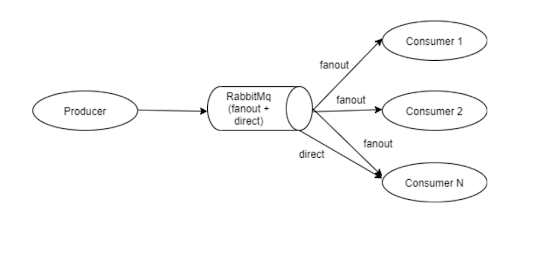
RabbitMQ Designs

Image
  RabbitMQ is used to make communication between services by messages. Using this we can achieve event-driven architecture. Most people have experienced RabbitMQ with the Simple  Push to Pull(P2P)  mechanism. They will simply push the messages into the queue and another service it will consume those messages. It's a kind of one-to-one mapping between the producer and consumer. People have read the exchanges and routing, but they didn't have the chance to implement it or map it into their use cases. I have started my RabbitMQ development with a simple P2P mechanism later it has enhanced with one too many relationships using exchanges and routing. P2P: I need to send an SMS to the end-user in my eCommerce application once the user confirmed the order. I have created a separate service to send an SMS based on the RabbitMQ message. Order service will push the message into the SMS queue once the user confirmed the order. SMS service will read the message from the SMS queue and...
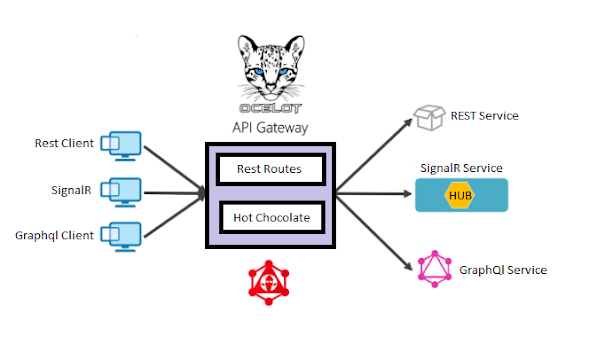
Hybrid Federated Ocelot Gateway

Image
Ocelot:  People who have experienced with .net core distributed microservices architecture will be very familiar with an ocelot. It's an API gateway to forward the request based on the routes. It supports the HTTP for rest services and WebSocket protocol for signalR services. It's providing a lot of features like authentication, Authorization, adding custom headers, and a lot. All are configurable. We can easily orchestrate multiple services using ocelot. It's a single point of contact to the outside world. It acts as a reverse proxy. As part of microservices architecture, each service will have a single responsibility. Sometimes service needs some data from other services or needs to complete some action from other services as part of business workflow. As part of distributed microservices architecture, there are many ways to enable communication between the services.  1) Service to Service communication via HTTP or Grpc. 2) Event-Driven via pub/sub model Service to servic...

Microservices Architectures

Image
  As part of API development, there are a lot of patterns or architecture that will be available. We can't stick with one pattern as part of large distributed application development. An application can be developed with multiple patterns based on the use cases as well as application performance also. I have created multiple services with multiple architectures or patterns based on the multiple-use case in order to achieve the best results. I have started creating the microservices for my application. Because my application involves multiple entities. Each entity playing a major role in the corresponding services. Based on my need I can scale, extend, and migrate the corresponding service. I have created multiple services. I need to provide my services to the consumers. Here my consumers are web applications and native applications.   Apigateway : All the consumers need to consume the services via endpoints or URL. As part of services development, we can add or update a number...