Posts

Log Correlation in Microservices

Image
  Logging is one of the most important factors to trace any issue in the system. Multiple requests will reach the system at the same time. Each request will have its own way. In Microservices architecture the complexity will be more. The same request will get forwarded to multiple systems. Each layer in each system will add some logs to trace the issue. But we need to link all the logs belonging to the request. Then only we identify how the request is behaving on each system. To Link all the logs into a single link, that is why correlation is required. There are multiple frameworks are available to correlate all the logs. Azure is providing azure app insights to link and showcase all the requests into a single pipeline. Kibana and Serilog also provide to link the logs. Here we are going to see to link the logs without any third-party components. Setup the CorrelationId: The request will originate from any client application or any subsystem. Each request can be identified ...

Graphql Migration Strategy

Image
 While moving from REST to Graphql people are encounter the following issues. 1) How we can migrate the backend without any customer impacts? 2) How we can migrate all our client apps from Rest to Graphql? 3) Will Graphql will serve the business needs without any performance downgrade in real load? There are five phases that will be required to move from REST to Graphql. Graphql Federation Setup: We need to develop the graphql microservices and need to be orchestrated via graphql federated gateway. So all the graphql APIs can be consumed via a single endpoint. Graphql Conversion Layer(GQCL): It's just a data conversion and pass-through layer. It will convert the rest api request to equivalent graphql requests and it will access the graphql gateway and return the responses back to restful services. Test on Graphql: Before releasing the Graphql gateway to client apps first it needs to be consumed by internal restful APIs. Restful APIs already serve the business needs. If grap...

RabbitMQ Retry Architechure

Image
  Event-Driven architecture services communicate by messages using Message brokers like RabbitMQ. The entire transaction will be completed if the message will get processed successfully. While processing messages from Queue there will be a chance of failure due to invalid data or resources unavailable. If data is invalid, then the message will get failed while processing. In this case, we can reject the message from the Queue and needs to send a notification to the corresponding services about the invalid data. Resource unavailability will be based on completing the entire transaction in the distributed system. The availability time will vary from milliseconds to seconds in distributed systems.  Once Resource is available, we need to process the message again. We need to retry the message in case of failure that will increase our system reliability and accuracy. Retry Mechanism: We can retry the message from RabbitMQ using two approaches.     1) Rollback  ...

RabbitMQ Designs

Image
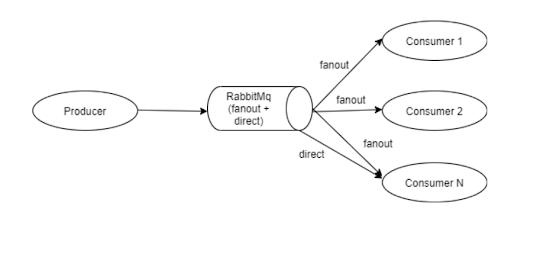
  RabbitMQ is used to make communication between services by messages. Using this we can achieve event-driven architecture. Most people have experienced RabbitMQ with the Simple  Push to Pull(P2P)  mechanism. They will simply push the messages into the queue and another service it will consume those messages. It's a kind of one-to-one mapping between the producer and consumer. People have read the exchanges and routing, but they didn't have the chance to implement it or map it into their use cases. I have started my RabbitMQ development with a simple P2P mechanism later it has enhanced with one too many relationships using exchanges and routing. P2P: I need to send an SMS to the end-user in my eCommerce application once the user confirmed the order. I have created a separate service to send an SMS based on the RabbitMQ message. Order service will push the message into the SMS queue once the user confirmed the order. SMS service will read the message from the SMS queue and...

Dapper Micro ORM (Connection Management)

Image
Dapper is a micro-ORM or a Data Mapper. It internally uses ADO.NET. Additionally, Dapper maps the ADO.NET data structures to your custom POCO classes. As this is additional work Dapper does, in theory, it cannot be faster than ADO.NET. It's Prevent SQL Injection from external user input by avoiding raw-SQL query string building. Dapper provides methods to build parameterized queries as well as passing sanitized parameters to stored procedures. Dapper has provided multiple methods to Query or execute the store procedures and SQL queries. At the High level, we can split into two categories as Query and Execute. Query: Its mainly used to fetch the data from the database. It has the following feature. To query the data in sync or async way  To fetch single or multiple records. To query single or multiple result sets also. Execute: It's mainly used to manipulate data in the database. We can pass store procedures or SQL statements as input to execute them into the database. It ...

Distributed Caching (Redis)

Image
  Caching is mainly used to store the data that are used very frequently or some form of complex computation. Caching is mainly used to improve the application performance and reduce the APIs latency. Cache memory made of high-speed static RAM so it will be faster than the normal Main memory. Cache memory will be expansive because of its speed. There is an N number of in-memory cache available. Redis is one of the open-source in-memory data stores to store the data in key-value format with optional durability. So while design the distributed caching we need to take the following consideration in order to meet the low latency with low cost. Is Caching Required: Based on the below points we can identity caching will be required for the application or not. 1) Number of reads and writes operations. 2) Number of reading operations at the individual data or user level.  3) Data can be converted into different formats for a particular period of time. It will reduce the heav...

Access As a Service

Image
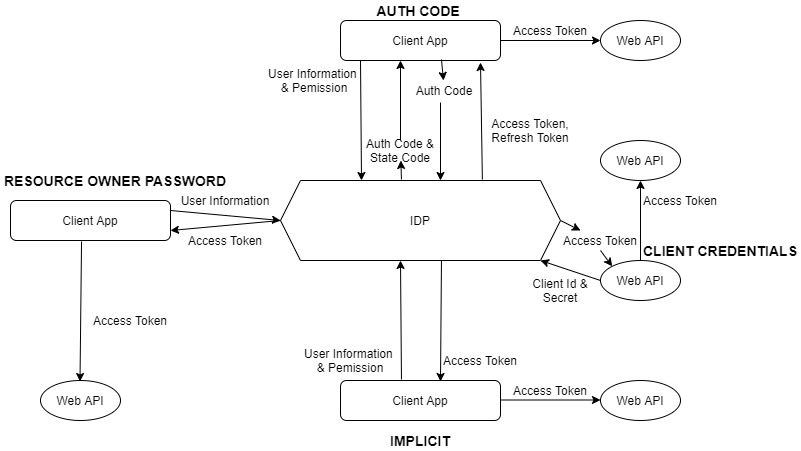
 As part of our needs, we are using a different kind of application. Each application has a different kind of login mechanism. Each mechanism will enhance user experience like federated login with an external provider and improve the application security like adding a verification layer as part of user login. Most of the applications are stateless and they are accessing their backend APIs using an access token. This access token should have information about the user access, minimal user information and it should expire as per the security needs. We can generate the access token in different ways using different types of grant types. ClientCredientials: This type of grant is commonly used for server-to-server interactions that must run in the background, without immediate interaction with a user. Multiple application they can communicate with each other using this flow.  They will pass their client id and the secret to the IDP and get the token. Using that token they will acce...

.NET Core NUGET packages

 .Net core development is based on the open-source NuGet packages. NuGet will reduce work and manage the application very easily. We need to select the NuGet based on the purpose otherwise it will impact the application performance as well as application size also. As part of the development lifecycle, we need to select a different set of libraries on each stage.  While creating a new service we need to inform what kind of APIs are going to be available and what are fields will belong to that each APIs. It will provide high-level information about the service. So We need clear documentation at the first phase of development itself. We can create documentation either manually or code-wise. Manual documentation will double the work. Code wise we can generate the document by code and based on the needs we can update it later. We can create high-level API documentation using Swashbuckle at the initial stage of development. Swashbuckle: We need to share the API specs while developi...

API Calls Evolution(Callback vs Promise vs Observables)

Application without API calls is very less in the market. At least they will send the app analytics details to the backend to improve their application feature. Making API calls is simple but it will have a lot of complexities in the implementation. As part of javascript, making API calls is a very critical part in terms of performance. We shouldn't block the thread until we receive the data. The application needs to know when the data is returned. Then its need to execute the data processing. Execute the data processing based on the API response will be simple or complex based on the business logic. Data processing parts have been improved a lot based on the developer pain-points. I have started my developments with callbacks, then promise, and now Observer. In each phase, they have addressed a lot of problems. Callback: Calling the function once a response is received. The response will be success or failure. Based on that function will get executed. This is a simple use case. ...

Hybrid Federated Ocelot Gateway

Image
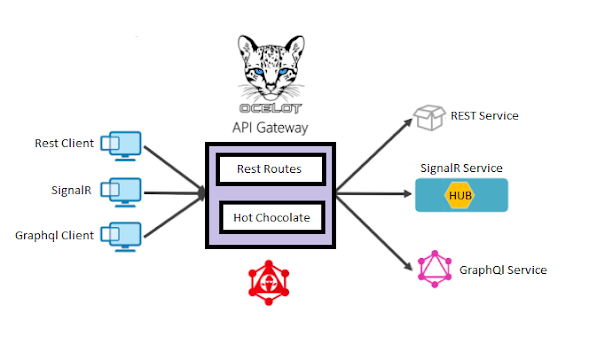
Ocelot:  People who have experienced with .net core distributed microservices architecture will be very familiar with an ocelot. It's an API gateway to forward the request based on the routes. It supports the HTTP for rest services and WebSocket protocol for signalR services. It's providing a lot of features like authentication, Authorization, adding custom headers, and a lot. All are configurable. We can easily orchestrate multiple services using ocelot. It's a single point of contact to the outside world. It acts as a reverse proxy. As part of microservices architecture, each service will have a single responsibility. Sometimes service needs some data from other services or needs to complete some action from other services as part of business workflow. As part of distributed microservices architecture, there are many ways to enable communication between the services.  1) Service to Service communication via HTTP or Grpc. 2) Event-Driven via pub/sub model Service to servic...

Microservices Architectures

Image
  As part of API development, there are a lot of patterns or architecture that will be available. We can't stick with one pattern as part of large distributed application development. An application can be developed with multiple patterns based on the use cases as well as application performance also. I have created multiple services with multiple architectures or patterns based on the multiple-use case in order to achieve the best results. I have started creating the microservices for my application. Because my application involves multiple entities. Each entity playing a major role in the corresponding services. Based on my need I can scale, extend, and migrate the corresponding service. I have created multiple services. I need to provide my services to the consumers. Here my consumers are web applications and native applications.   Apigateway : All the consumers need to consume the services via endpoints or URL. As part of services development, we can add or update a number...

REST VS GRAPHQL VS GRPC

  I am seeing a lot of posts about GRAPHQL is going to replace the REST. From my experience, it might not happen. Rest replaced the SOAP because of content-type. Rest supported JSON. That is the big milestone in terms of performance using data transfer. Data transfer has been reduced a lot using JSON instead of XML. Here REST and GRAPHQL using JSON as data transfer. Both will support microservice architecture. The difference is GRAPHQL using queries as part of the post method for all type of CRUD. Protocols and Verbs: REST is using the HTTP protocol. Directly we can access from the browser. It provides HTTP verbs for a different type of CRUD operation. Graphql is also using HTTP protocol. We can access via the playground or simple post API from the postman. It provides different names like Query and Mutation of CRUD operation. Authentication & Authorization: In Microservices architecture we can keep Authentication and Authorization at the gateway level or services level, or API...